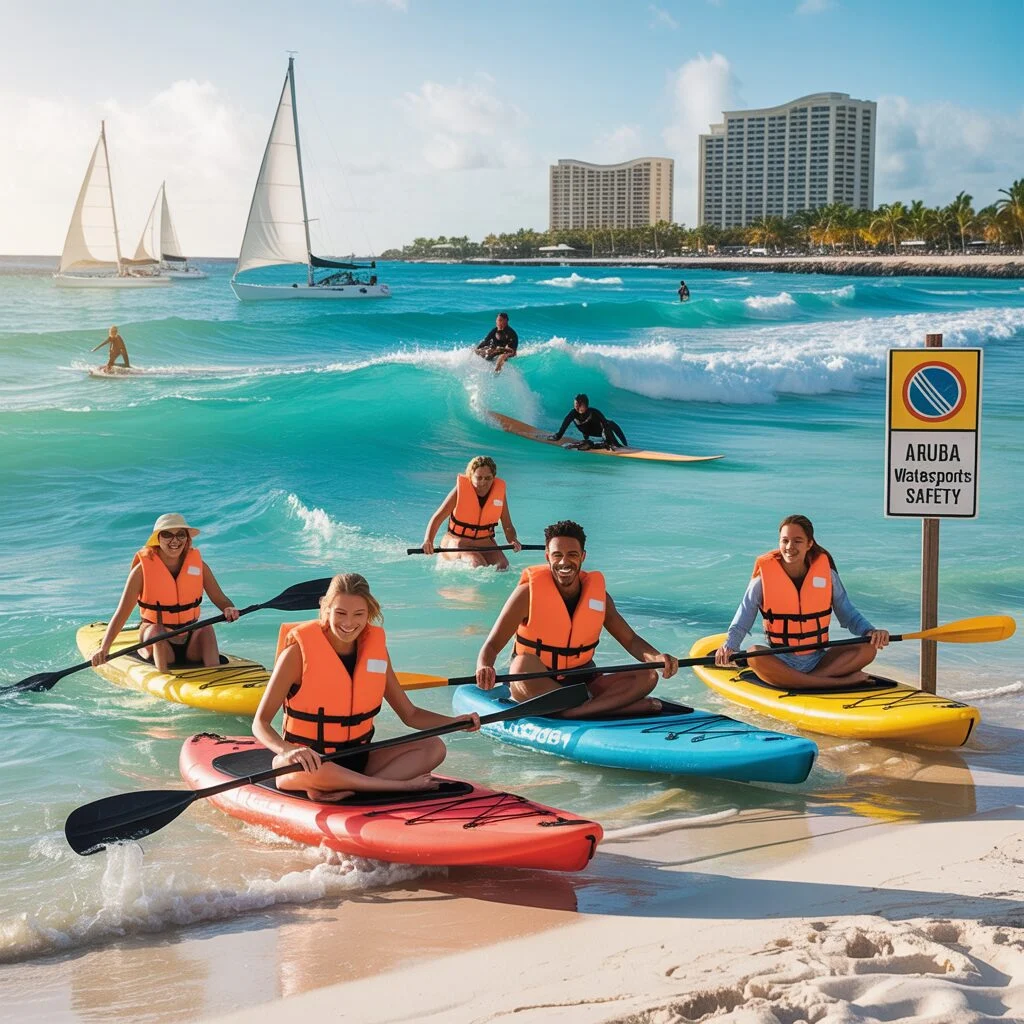
To stay safe during Aruba water sports, complete these 3 steps before entering the water: get medical clearance if diving (mandatory for heart/lung conditions), apply SPF 30+ sunscreen 20 minutes before activity and reapply every 2 hours, and verify your travel insurance covers water sports accidents including hyperbaric treatment. These precautions prevent 70-80% of common water sports injuries according to Caribbean dive safety data.
How to Prepare Physically for Water Sports in Aruba
Assess your fitness level and medical history before booking. Heart conditions, asthma, or ear problems require medical clearance for diving due to pressure changes at depth.
Should You Get a Medical Checkup Before Scuba Diving?
Get medical clearance if you have asthma, heart issues, or ear problems – operators require a signed medical statement before allowing you to dive. Underwater pressure changes stress cardiovascular and respiratory systems beyond normal activity levels.
Verifying Swimming Skills for Different Activities
Match your swimming ability to the activity: snorkeling requires basic floating, while kitesurfing and windsurfing demand strong stamina to manage equipment in open water. Overestimating your skills leads to exhaustion in deep water.
Securing Travel Insurance with Water Sports Coverage
Verify your policy covers water sports accidents, medical evacuation, and hyperbaric chamber treatment (costs $500-2000 per session). Standard policies exclude “high-risk” activities, leaving you liable for emergency medical costs.
Protecting Health Against Sun and Heat Exposure
UV radiation in Aruba measures 11+ on the UV index year-round. Trade winds mask heat impact, causing dehydration and burns within 30-45 minutes of unprotected exposure.
How to Prevent Dehydration While on the Water
Drink 250ml of water every 30 minutes during water activities, even without thirst. Salt water and sun accelerate fluid loss by 40-50% compared to land activities. Use electrolyte drinks for activities lasting over 2 hours.
Selecting Water-Resistant Sunscreen for UV Protection
Apply SPF 30+ broad-spectrum, water-resistant sunscreen 20 minutes before water entry. Reapply every 2 hours – UV radiation penetrates water to 1 meter depth, causing burns on submerged skin.
Recognizing Symptoms of Heat Exhaustion and Sunstroke
Move to shade immediately if you experience dizziness, excessive sweating, rapid pulse, nausea, or confusion. Heat exhaustion progresses to life-threatening heatstroke within 15-30 minutes without cooling intervention.
Assessing Water Conditions and Weather Patterns
Check wind speeds and current conditions daily – Aruba’s northern coast generates rip currents moving 2-3 meters per second, faster than Olympic swimmers. Stick to western and southern coasts for calmer conditions.
How Ocean Currents Impact Swimming Safety in Aruba
Swim parallel to shore if caught in a rip current – fighting against 2-3 meter/second currents causes exhaustion within 3-5 minutes. Northern coast currents pull swimmers 50-100 meters offshore in under 2 minutes.
Monitoring Wind Speeds for Kitesurfing and Windsurfing
Check daily wind forecasts – safe beginner conditions are 12-18 knots, while 25+ knot gusts make controlling equipment dangerous. Sudden wind increases of 5-10 knots occur within minutes during afternoon thermal changes.
Identifying Warning Flags on Beaches
Observe beach flags before entering water – they indicate current risk levels:
- Red Flag: high hazard, swimming prohibited due to currents over 1.5 meters/second or waves exceeding 1.5 meters,
- Yellow Flag: medium hazard, stay within 20 meters of shore,
- Green Flag: low hazard, conditions safe with normal precautions.
Using Personal Safety Equipment Correctly
Properly fitted life jackets keep you buoyant for 24+ hours even if unconscious. Inspect all rental gear for cracks, wear, and proper fit before use – 30-40% of equipment failures stem from pre-existing damage.
Why Wearing a Life Jacket Is Necessary for Motorized Sports
Life jackets are mandatory for jet skiing and parasailing – they maintain buoyancy for 24+ hours if you’re unconscious after collision. Fasten all straps securely; loose vests slip off upon water impact.
Inspecting Rental Gear for Damage and Fit
Check masks for cracks, regulators for smooth airflow, and straps for fraying before accepting rental equipment. Replace any ill-fitting gear immediately – poorly fitted masks flood within 5-10 minutes underwater, causing panic.
Using Wetsuits for Thermal Protection and Abrasion Safety
Wear wetsuits to prevent hypothermia after 60-90 minutes in 26-28°C water and protect against coral cuts and stinging organisms. Wetsuits reduce abrasion injuries by 60-70% during reef contact.
Safety Guidelines for Snorkeling and Scuba Diving
Ascend at maximum 9 meters per minute to prevent decompression sickness – faster ascents cause nitrogen bubbles in blood within 30-60 minutes. Never hold your breath while ascending to avoid lung over-expansion injuries.
Preventing Decompression Sickness and Barotrauma
Ascend at 9 meters per minute maximum and follow decompression table limits strictly. Faster ascents or skipped safety stops cause “the bends” within 30-60 minutes, requiring immediate hyperbaric treatment costing $500-2000 per session.
How to Practice the Buddy System Underwater
Maintain visual contact with your dive buddy within 2-3 meters at all times. Agree on hand signals before descent – buddies resolve 80-90% of equipment issues and prevent drowning during cramps or fatigue.
Managing Risks of Nitrogen Narcosis
Monitor yourself and buddy for confusion or irrational behavior below 30 meters depth. Nitrogen narcosis impairs judgment similar to 0.05% blood alcohol. Ascend 5-10 meters to restore clear thinking within 1-2 minutes.
Equalizing Ear Pressure Effectively
Equalize ears every 1-2 meters during descent to prevent eardrum rupture. Stop and ascend slightly if you feel pain – forcing equalization causes injuries requiring 2-4 weeks recovery and ends diving activities.
Operating Jet Skis and Motorized Watercraft Safely
Maintain 50-100 meter distance from swimmers and 30 meters from other vessels. Speed limits in resort zones are 5-8 knots – violations cause 60-70% of jet ski collisions according to Caribbean maritime data.
Following Local Navigation Rules and Speed Limits
Adhere to 5-8 knot speed limits in designated swimming zones and stay in marked boating channels. Speeding near shore causes 60-70% of jet ski accidents in resort areas.
Maintaining Safe Distances from Swimmers and Boats
Keep 50-100 meters from swimmers and 30 meters from other vessels. Closer distances reduce reaction time below 3-5 seconds needed to avoid collisions during sudden maneuvers or engine failure.
Using Kill Switch Lanyards for Emergency Stops
Attach engine shut-off clip to your wrist or life jacket before starting. Kill switches stop runaway jet skis within 2-3 seconds after falls, preventing circling collisions or uncontrolled drift.
Interacting Safely with Marine Life and Coral Reefs
Maintain 30-50cm distance from all coral and marine life. Fire coral contact causes painful stings lasting 2-48 hours, while sea urchin spines require medical removal within 24 hours to prevent infection.
What Are the Risks of Contact with Fire Coral?
Fire coral delivers burning stings causing skin irritation lasting 2-48 hours and potential allergic reactions requiring medical treatment. Maintain 30-50cm clearance from reef structures through neutral buoyancy control.
Avoiding Hazardous Marine Creatures in Caribbean Waters
Wear protective footwear in shallow rocky areas – sea urchin spines penetrate skin and require medical removal within 24 hours. Never touch marine animals; 40-50% use venom for defense causing injuries requiring 1-3 days recovery.
Preserving Ecosystems to Reduce Environmental Hazards
Use reef-safe sunscreen to prevent chemical bleaching that kills coral within 48-96 hours of exposure. Damaged reefs create sharp hazard zones and lose wave-breaking capacity, increasing shore erosion by 30-40%.
Emergency Procedures and Medical Response
Call 911 immediately for water emergencies. Dr. Horacio E. Oduber Hospital operates the island’s only recompression chamber – decompression sickness requires treatment within 6 hours for best outcomes.
How to React During a Water Sports Accident
Signal for help using raised arms (international distress signal) and exit water safely if injured. Keep wetsuit on if fracture is suspected – removal can worsen injuries by 20-30% before medical assessment.
Locating Medical Facilities and Hyperbaric Chambers in Aruba
Dr. Horacio E. Oduber Hospital houses the island’s recompression chamber for treating decompression sickness. Treatment must begin within 6 hours of symptom onset for 90%+ recovery rates.
Who to Contact in Case of an Emergency
Call 911 for police and ambulance (average response time 8-12 minutes in resort areas). Inform hotel/tour operator immediately – they coordinate rescue services and transport 30-40% faster than individual calls.
Performing Basic First Aid for Water Injuries
Clean coral cuts with fresh water and apply antiseptic within 15 minutes to prevent infection. For jellyfish stings, rinse with vinegar or seawater only – fresh water worsens stings by 40-50%. Apply pressure to bleeding wounds while awaiting medical help.
Selecting Qualified Water Sports Operators
Verify instructors hold current PADI or NAUI certifications (renewed every 2 years). Licensed operators display permits prominently – unlicensed operations account for 50-60% of serious water sports accidents in Caribbean tourism.
Checking Instructor Certifications and Business Licenses
Confirm dive masters hold current PADI or NAUI certifications renewed within past 2 years. Licensed operators display operating permits prominently – certified professionals reduce accident rates by 50-60% through proper emergency training.
Evaluating Safety Briefings and Equipment Quality
Expect 10-15 minute safety briefings before activities. Faded, frayed, or poorly maintained equipment indicates 40-50% higher failure risk. Skipped briefings are major safety violations – choose different operators immediately.
Reviewing Operator Safety Records and Reviews
Research online reviews for safety practice comments and accident history. Operators with 2+ safety incidents in past year show 3-4x higher accident rates. Reliable companies limit group sizes to 6-8 participants per instructor for proper supervision.