Pre-Trip Health Preparations for Elderly Travelers
Schedule a doctor appointment 4-6 weeks before your trip to assess fitness for travel and adjust medications for tropical conditions. Request a formal letter describing your medical conditions and current treatments—this document is essential if you need emergency care in Aruba.
Elderly travelers to Aruba should focus on three critical areas: schedule a doctor visit 4-6 weeks before departure to adjust medications and get vaccinations, drink water every 2-3 hours and avoid sun exposure between 11 AM-3 PM to prevent heat illness, and secure travel insurance with pre-existing condition coverage and medical evacuation (costs $50,000+ without insurance). Aruba’s tap water is safe to drink, the main hospital (Dr. Horacio Oduber Hospital) is modern with English-speaking staff, and emergency services are reached by dialing 911.
Consulting a Healthcare Provider Before Departure
Your pre-trip medical consultation should cover medication dosage adjustments for changes in diet and activity, compression stockings to prevent Deep Vein Thrombosis during flights lasting over 4 hours, and proper use of portable monitoring devices like blood pressure cuffs or glucometers.
Key discussion points:
- medication adjustment: dosages may need changing due to heat, increased activity, or dietary shifts,
- flight safety: compression stockings reduce DVT risk by 50-70% on flights over 4 hours,
- health monitoring: learn to use portable devices correctly and establish baseline readings.
Vaccinations Recommended for Aruba Travelers
Ensure you are current on these four vaccinations before traveling to Aruba:
- Influenza (Flu): required if traveling October-March (flu season),
- Tetanus-Diphtheria-Pertussis (Tdap): booster needed every 10 years,
- Shingles (Herpes Zoster): recommended for all travelers over 50,
- Hepatitis A and B: standard for international travel regardless of destination.
Choosing the Right Travel Insurance for Seniors
Medical evacuation from Aruba to the US costs $50,000-$100,000 without insurance. Purchase comprehensive travel insurance with these three essential features:
| Feature | Why it is Critical for Seniors |
|---|---|
| Pre-existing Condition Waiver | Covers chronic conditions like heart disease or diabetes (typically requires purchase within 14 days of initial trip deposit). |
| Medical Evacuation | Covers air ambulance services costing $50,000-$100,000 if local facilities cannot treat you. |
| Trip Cancellation | Reimburses 100% of non-refundable costs if health issues prevent travel. |
Managing Medications While Traveling
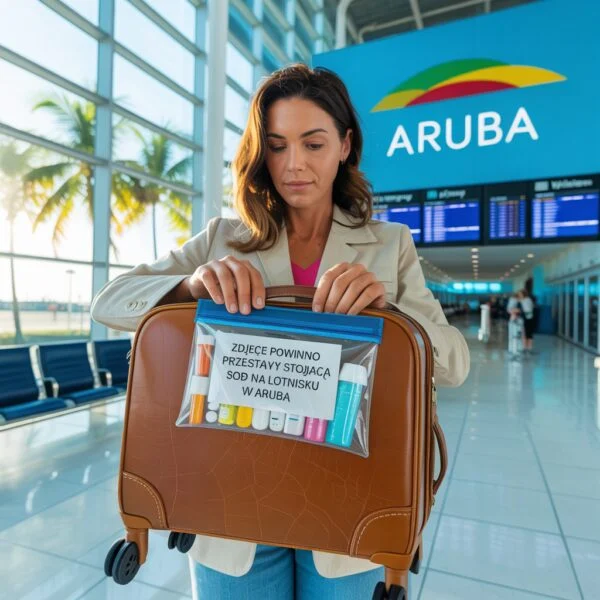
Pack medications in original pharmacy containers with visible labels showing your name, doctor’s name, and dosage. Bring your entire trip supply plus 7 extra days in carry-on luggage only—never in checked bags.
Rules for Bringing Prescription Drugs to Aruba
Aruba customs requires controlled substances (painkillers, psychotropic medications) to have a medical statement from your physician. All medications must be in original pharmacy containers with labels clearly showing your name, prescribing doctor, and dosage instructions.
Pack a supply lasting your entire trip plus 7 extra days for delays. Always carry medications in carry-on luggage—checked bags are lost in 1-2% of flights.
How to Store Medication in a Tropical Climate
Aruba’s average temperature is 82-88°F (28-31°C), which degrades insulin, heart medications, and inhalers within 2-4 hours of direct heat exposure.
Storage requirements:
- use insulated bags: medical-grade cooler packs maintain 36-46°F (2-8°C) for insulin and temperature-sensitive drugs,
- avoid direct sunlight: medications left in parked cars reach 130-170°F (54-77°C) within 30 minutes,
- room temperature: store medications in the coolest part of your hotel room (typically bathroom or closet), away from windows and air conditioning vents.
Finding Pharmacies and Medical Supplies in Aruba
Aruba has 15+ pharmacies (“boticas”) operating on rotation for after-hours service. Most are located in Palm Beach, Eagle Beach, and Oranjestad. Pharmacies stock common over-the-counter medicines, but brand names differ from US/European versions.
Know the generic name of your medication—pharmacists can substitute equivalent brands. Bring specialized medical supplies (catheter bags, specific wound care items, diabetic testing strips) from home as local stock is limited.
Adapting to Aruba’s Climate Considerations
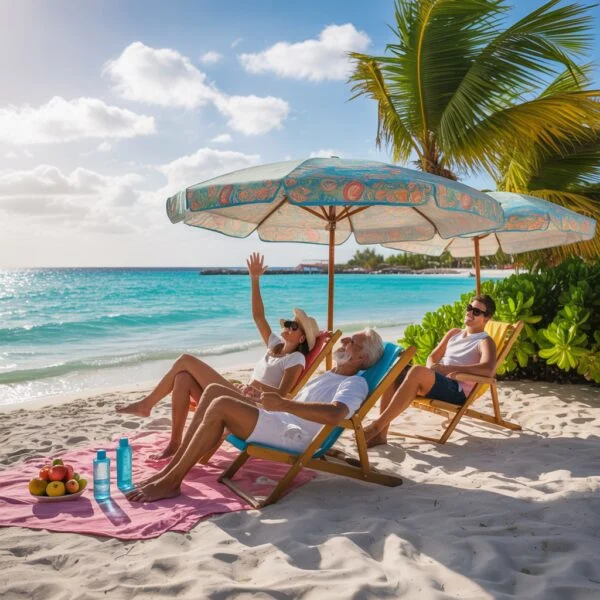
Aruba’s UV index reaches 11+ (extreme) year-round, and temperatures average 82-88°F (28-31°C). Avoid outdoor activities between 11 AM-3 PM when heat and UV exposure peak. Seniors are 3-5 times more susceptible to heat illness than younger adults.
Preventing Heat-Related Illnesses in Older Adults
Heat exhaustion symptoms appear within 30-60 minutes of excessive heat exposure. Move to air conditioning immediately if you experience dizziness, excessive sweating, cold/clammy skin, nausea, or headache.
Warning signs requiring immediate medical attention:
- dizziness or lightheadedness lasting more than 5 minutes,
- excessive sweating or cold, clammy skin despite heat,
- nausea or headache accompanied by confusion or rapid heartbeat.
Schedule outdoor activities before 11 AM or after 3 PM when temperatures drop 5-8°F (3-4°C).
Sun Protection Tips for High UV Exposure
Apply broad-spectrum SPF 50+ sunscreen every 2 hours—seniors’ thinner skin burns 40-60% faster than younger adults. UV index in Aruba averages 11+ (extreme) requiring maximum protection.
Essential protection measures:
- apply broad-spectrum sunscreen with SPF 50+ every 2 hours (1 ounce per application for full body coverage),
- wear wide-brimmed hats (3+ inch brim) and UV-blocking sunglasses (UV400 rating minimum),
- use UPF 50+ “rash guard” swim shirts blocking 98% of UV rays during water activities.
Hydration Strategies to Avoid Dehydration
Drink 8-10 ounces of water every 2-3 hours—seniors’ diminished thirst response means you can be dehydrated without feeling thirsty. Dehydration symptoms appear when you’ve lost 2-3% of body weight in fluids.
Hydration schedule:
- drink 8 ounces of water immediately upon waking,
- carry a 32-ounce reusable water bottle and finish it every 3-4 hours,
- add electrolyte solutions (Pedialyte, Gatorade) if sweating heavily—replace every 2 hours during outdoor activities,
- limit alcohol and caffeine to 1-2 servings daily—both increase fluid loss by 20-30%.
Dietary Recommendations and Food Safety
Aruba’s tap water is distilled through desalination and safe to drink—it meets or exceeds US EPA standards. Stick to cooked, hot foods if you have a sensitive digestive system, and choose grilled or baked options over fried foods to aid digestion.
Is Tap Water in Aruba Safe for Seniors?
Yes—Aruba’s tap water is distilled in a saltwater desalination plant and meets international safety standards. It is considered among the best drinking water in the Caribbean, eliminating the need for bottled water.
How to Avoid Food and Waterborne Illnesses
Foodborne illness affects 20-30% of international travelers. Reduce risk by 80-90% with these precautions:
- wash fruits and vegetables thoroughly even though tap water is safe,
- avoid street food if you have a sensitive digestive system—stick to cooked foods served at 165°F (74°C) or higher,
- ensure seafood is fully cooked to internal temperature of 145°F (63°C) to prevent bacterial infections.
Healthy Dining Choices for Elderly Visitors
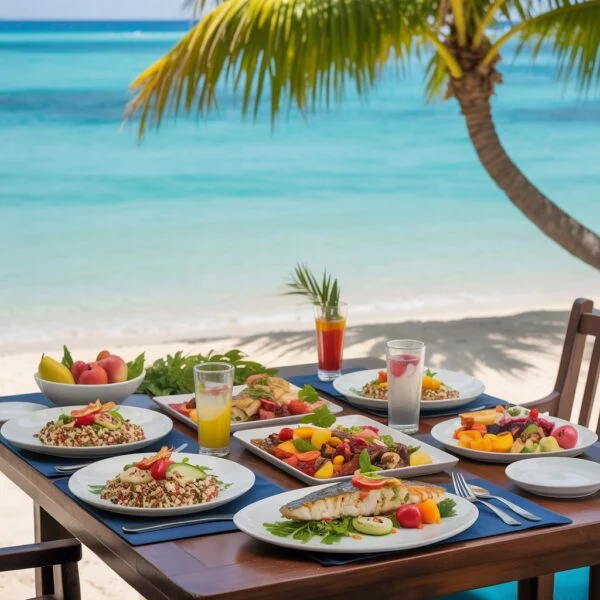
Choose lean proteins like locally caught Mahi-Mahi or Grouper (3-4 ounces per serving) and fresh tropical fruits for vitamins and hydration. Lighter meals maintain energy levels in heat better than heavy, fried foods.
Restaurant ordering tips:
- choose grilled or baked options over fried foods—reduces fat intake by 40-60%,
- request sauces on the side to control sodium (limit to 2,300mg daily) and sugar intake,
- eat fresh tropical fruits (papaya, mango, pineapple) providing 50-100% daily vitamin C requirements per serving.
Physical Activity and Accessibility in Aruba
Schedule walks before 11 AM when temperatures are 5-8°F cooler, and plan afternoon rest periods of 1-2 hours in air-conditioned spaces. Never swim alone—always have a companion within 10 feet.
Safe Physical Activity Guidelines for Seniors
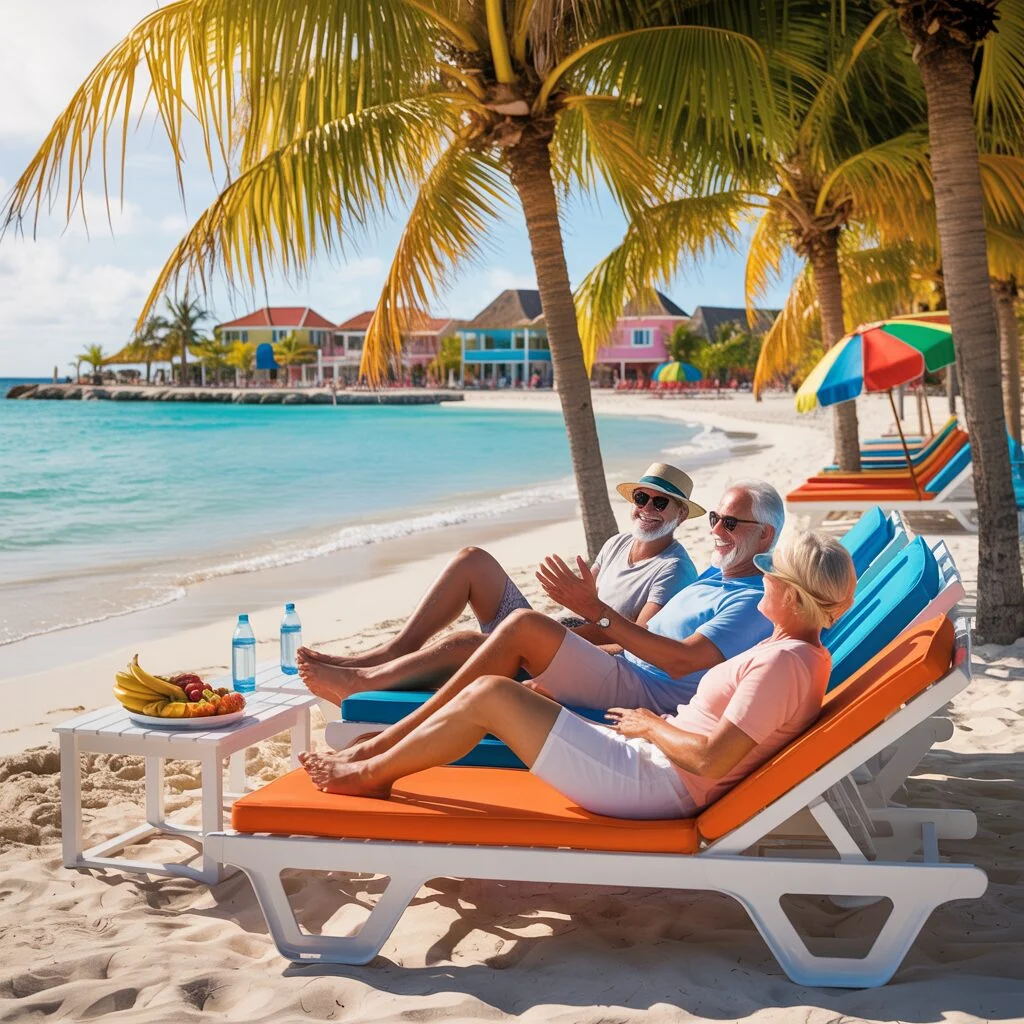
Swimming in Palm Beach or Eagle Beach provides low-impact exercise without joint stress. Water temperature averages 79-82°F (26-28°C) year-round—ideal for 20-30 minute sessions.
Activity safety rules:
- walk early: schedule walks for 6-10 AM when temperatures are 78-82°F (26-28°C),
- buddy system: never swim alone—drowning risk increases 5-fold for solo swimmers over 65,
- proper footwear: wear water shoes with non-slip soles to prevent cuts from coral or rocks.
Preventing Travel Fatigue During the Vacation
Plan 1-2 hour afternoon rest periods between 1-3 PM in air-conditioned spaces. Spreading activities across multiple days reduces exhaustion risk by 60-70% compared to packed daily schedules.
Energy management strategies:
- scheduled rest: rest 1-2 hours daily during peak heat (1-3 PM) in air-conditioned room,
- pacing: limit to 1-2 major activities per day—spread excursions across trip duration,
- sleep hygiene: maintain 7-8 hours nightly sleep on consistent schedule to regulate circadian rhythm.
Accessibility Options for Travelers with Limited Mobility
Eagle Beach offers Mobi-Mats (beach access mats) allowing wheelchair access to water. Oranjestad has paved, flat sidewalks suitable for walkers and wheelchairs. Book specialized taxis with hydraulic lifts 24-48 hours in advance.
| Facility | Accessibility Feature |
|---|---|
| Beaches | Mobi-Mats at Eagle Beach and Palm Beach provide wheelchair access to water’s edge. |
| Sidewalks | Oranjestad has 90% paved, flat sidewalks with curb cuts suitable for walkers and wheelchairs. |
| Transport | Specialized taxis with hydraulic lifts available with 24-48 hour advance booking (+297 582 2116). |
Medical Facilities and Emergency Resources
Dr. Horacio Oduber Hospital (HOH) near Eagle Beach is the main facility with 24/7 emergency services and English-speaking staff. Dial 911 for police and ambulance emergencies. Most facilities require upfront payment or proof of international insurance before non-emergency treatment.
Overview of Medical Facilities in Aruba
Dr. Horacio Oduber Hospital (HOH) is a 280-bed modern facility located near Eagle Beach, equipped to handle cardiac emergencies, strokes, and major trauma. The Urgent Care center in Noord treats non-life-threatening conditions with 8 AM-10 PM hours daily.
Staff speak English, Dutch, and Spanish fluently. Emergency department wait times average 30-60 minutes for non-critical cases.
Emergency Contact Information for Tourists
Save these numbers in your phone and write on a card in your wallet:
- 911: police and ambulance emergencies (average response time 8-12 minutes),
- 100: fire department emergencies,
- Hospital Main Line: +297 527 4000 (24/7 operator).
How to Access Local Health Resources
Many hotels offer on-call doctors who visit rooms within 1-2 hours for $150-250 per visit—most convenient for minor infections, dehydration, or medication adjustments. For prescription refills, visit any “Botica” (pharmacy) with your original prescription bottle.
Hospital visits require passport and insurance information at check-in. Facilities require upfront payment ($500-2,000 deposit) or proof of valid international insurance before non-emergency treatment. Emergency care is provided regardless of ability to pay, with billing processed afterward.