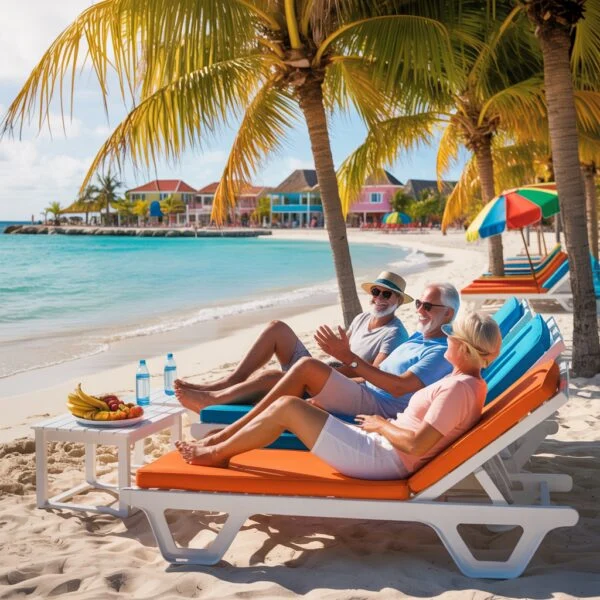

I will guide you through the essential preparations and safety measures for planning a relaxing babymoon to Aruba. Aruba is Zika-free and safe for pregnant travelers, with the ideal visit window between 14-28 weeks of pregnancy. You must obtain travel health insurance covering pregnancy emergencies, carry prenatal records, and avoid scuba diving and rough terrain activities. The tap water is safe to drink, and the Dr. Horacio Oduber Hospital provides modern obstetric care. Let’s explore the critical details that ensure your Caribbean getaway is both safe and memorable.
Is Aruba Safe for Pregnant Travelers?
Aruba is Zika-free and ranks among the Caribbean’s safest destinations for expecting mothers. The island has modern infrastructure, high safety standards, and no active Zika transmission according to major health organizations. However, you must still use EPA-registered insect repellents (DEET or Picaridin) to prevent Dengue, which occurs at low rates.
What Is the Current Status of Zika Virus in Aruba?
Aruba is classified as Zika-free by major health organizations, making it safer than most Caribbean destinations for pregnant travelers. While Zika risk is minimal, Dengue cases occur occasionally. Use EPA-registered insect repellents containing DEET or Picaridin (both pregnancy-safe) and wear light-colored, loose-fitting clothing during dawn and dusk when mosquitoes are most active.
What Are the General Health Precautions for Expecting Mothers?
Schedule an obstetrician appointment 4-6 weeks before departure to confirm your pregnancy is stable for international travel. Your doctor must provide a “fit to fly” letter and verify that routine vaccines (flu shot, Tdap) are current. Carry physical copies of your prenatal records including due date, blood type, and any complications.
How Does Aruba’s Climate Affect Pregnant Travelers?
The UV index reaches extreme levels (10+) that can burn skin in under 15 minutes, and pregnancy hormones increase melasma risk. Trade winds mask the true temperature, leading to dehydration and heat exhaustion. Drink water every 30-60 minutes even if you don’t feel thirsty, seek shade between 11 AM-3 PM, and apply SPF 30-50 sunscreen every 2 hours.
Planning the Trip: Timing and Preparation
The optimal travel window is 14-28 weeks of pregnancy (second trimester) when energy levels peak and morning sickness typically subsides. After 28 weeks, preterm labor risks increase; after 36 weeks (32 for multiples), most airlines prohibit travel entirely.
When Is the Best Time to Visit Aruba During Pregnancy?
Visit during weeks 14-28 of pregnancy for maximum comfort and safety. During this second trimester window, you’ll experience higher energy levels and minimal morning sickness. Airlines restrict travel after 36 weeks for single pregnancies and 32 weeks for multiples, while travel after 28 weeks requires medical clearance letters dated within 48-72 hours of departure.
How to Schedule Prenatal Care Before Traveling
Book a checkup 3-5 days before departure to confirm fetal health and obtain required travel clearance. Your healthcare provider must supply a “fit to fly” letter, due date confirmation, and blood type documentation. Schedule your next appointment immediately upon return to monitor post-travel health.
What Travel Risk Management Steps Should You Take?
Book hotels near Eagle Beach or Palm Beach, which are within 10-15 minutes of Dr. Horacio Oduber Hospital. Save the hospital’s coordinates (+297 527 4000) in your phone and inform your hotel concierge of your pregnancy upon check-in. Limit yourself to one major activity per day to prevent overexertion.
Entry Requirements and Travel Documents
US, Canadian, and EU citizens need no visa for stays under 30 days, but must complete the online ED Card 1-7 days before travel. Your passport must be valid for your entire stay, and you should carry proof of return tickets and accommodation to avoid birth tourism concerns at immigration.
What Are the Visa Policies and Entry Rules for Aruba?
Complete the online ED Card (Embarkation-Disembarkation Card) 1-7 days before your flight—this is mandatory for all travelers. US, Canadian, and EU citizens require no visa for tourist stays under 30 days. Carry return tickets and hotel confirmation to demonstrate you’re not entering for birth tourism purposes.
Does Aruba Require a Yellow Fever Vaccination Certificate?
Yellow Fever vaccination is required only if arriving from endemic countries in South America or Africa. Direct flights from the US, Canada, or Europe require no certificate. Since Yellow Fever vaccine is contraindicated during pregnancy, avoid layovers in endemic countries to bypass this requirement.
Why Is Travel Health Insurance Essential for Pregnancy?
Comprehensive travel health insurance is mandatory because domestic plans provide little to no international coverage. Your policy must cover pregnancy-related emergencies, preterm labor, emergency medical evacuation (air ambulance), and trip cancellation due to medical reasons. Verify these specific coverages before purchasing.
Flying to Aruba: Guidelines and Comfort
Most airlines allow unrestricted travel until 28 weeks; between 28-36 weeks you need a medical certificate dated within 48-72 hours of departure. Travel is prohibited after 36 weeks (32 for multiples). Book an aisle seat for bathroom access and stand every hour to prevent Deep Vein Thrombosis (DVT).
What Are the Airline Policies for Pregnant Travelers?
Airlines require a medical certificate between 28-36 weeks, dated within 48-72 hours of departure. Travel is unrestricted before 28 weeks and prohibited after 36 weeks for single pregnancies (32 weeks for multiples). Check your specific carrier’s policy (American Airlines, JetBlue, KLM) before booking and carry your doctor’s note in hand luggage.
How to Prevent Deep Vein Thrombosis During Air Travel
Wear graduated compression socks throughout the flight and stand every 60 minutes to maintain circulation. Pregnancy increases DVT risk by 5-10 times, and sitting for extended periods compounds this danger. Perform ankle rotations and calf raises while seated, drink water every 30-60 minutes, and avoid caffeine and salty snacks.
What Are the Best Seats for Pregnant Passengers?
Book an aisle seat for unrestricted bathroom access and easier movement for hourly walks. Consider bulkhead or economy plus seats for extra legroom (typically 3-6 inches more space). Avoid exit row seats—regulations often prohibit pregnant passengers due to emergency door operation requirements.
Medical Facilities and Emergency Resources
Dr. Horacio Oduber Hospital (HOH) near Eagle Beach provides modern obstetric care with English-speaking staff and a dedicated maternity ward. Dial 911 for emergencies or call the hospital directly at +297 527 4000. Enroll in the Smart Traveler Enrollment Program (STEP) before departure for consular assistance.
What Healthcare Services Are Available in Aruba?
Dr. Horacio Oduber Hospital (HOH) is located 10-15 minutes from Eagle Beach and offers modern obstetric care with English, Dutch, and Spanish-speaking staff. The facility has a dedicated maternity ward and emergency department capable of handling most pregnancy complications. Private urgent care clinics (ImSan) operate in San Nicolas for minor issues.
How to Access Emergency Contact Information
Dial 911 for ambulance or police assistance—this central number connects to emergency dispatchers. Save Dr. Horacio Oduber Hospital’s direct number (+297 527 4000) in your phone. Keep your accommodation’s address and phone number written down to provide to emergency responders if needed.
What Resources Does the U.S. Embassy Offer Travelers?
Aruba falls under the U.S. Consulate General in Curacao’s jurisdiction—they cannot provide direct medical care but assist with passport replacement and family communication during crises. Enroll in the Smart Traveler Enrollment Program (STEP) before your trip so the Consulate can contact you with safety updates and locate you in emergencies.
How to Locate Pharmacies and Medical Supplies
One “pharmacy on duty” (Botica) operates after hours on a rotating schedule—your hotel front desk maintains the current schedule. Pharmacies stock European and American medication brands but aren’t open 24/7. Pack enough prescription medications for your entire trip plus 3-5 extra days for potential delays.
Health and Nutrition: Water, Food, and Sun
Aruba’s tap water is safe to drink and meets WHO standards thanks to advanced desalination technology. Drink water every 30-60 minutes to prevent dehydration-triggered Braxton Hicks contractions. Apply SPF 30-50 reef-safe sunscreen every 2 hours and avoid peak sun (11 AM-3 PM).
Is the Air and Water Quality in Aruba Safe?
Tap water is safe to drink and meets World Health Organization standards—Aruba uses sophisticated desalination to convert seawater into potable water. Air quality is excellent due to constant trade winds that disperse pollutants. You can safely drink tap water, eliminating the need for bottled water purchases.
How to Maintain Hydration and Nutrition While Traveling
Drink water every 30-60 minutes to prevent dehydration, which triggers Braxton Hicks contractions and fatigue. Carry a reusable water bottle and refill with safe tap water. Eat small meals every 2-3 hours to stabilize blood sugar and pack portable snacks like nuts or trail mix for protein, dried fruit for fiber, and whole grain crackers for nausea management.
How to Protect Against Sun Exposure and Heat Exhaustion
Plan outdoor activities before 11 AM or after 3 PM to avoid peak UV exposure when the index reaches 10+. Wear a wide-brimmed hat and sunglasses. Apply broad-spectrum, reef-safe sunscreen with SPF 30-50 every 2 hours (more frequently if swimming). Move to cool areas immediately if you experience dizziness, nausea, or headaches—early heat exhaustion signs.
What Dietary Precautions Should You Take?
Avoid raw or undercooked seafood (ceviche, sushi) which carries parasite and bacteria risks harmful to the fetus. Ensure soft cheeses are pasteurized, order meat well-done, and wash raw fruits/vegetables thoroughly. Stick to reputable restaurants rather than street vendors for high-risk items like meat or dairy.
Transportation Recommendations and Local Travel
Official taxis are the safest option—they operate on fixed zone-based rates (no meters) and are regulated, clean, and reliable. Public buses (Arubus) offer air-conditioned service between hotel zones and Oranjestad. If driving, wear the lap belt below your belly and shoulder belt between your breasts.
What Are the Safest Local Transportation Options?
Official taxis operate on fixed zone-based rates and are the safest, most convenient option for pregnant travelers. They’re regulated, clean, and reliable with upfront pricing. Public buses (Arubus) provide air-conditioned service between hotel zones and downtown Oranjestad at affordable rates.
How to Navigate Local Laws and Customs
Traffic moves on the right-hand side; seatbelts are mandatory for all passengers. Wear the lap belt below your belly across your hips and the shoulder belt between your breasts. Traffic already in roundabouts has right-of-way. Local driving can be aggressive, so stay alert and drive defensively.
Should You Rent a Car or Use Taxis?
Use taxis to eliminate navigation stress, parking challenges, and unfamiliar traffic patterns. Taxis are recommended over rental cars for pregnant travelers. If exploring remote areas like the northern coast requires a car, choose one with good air conditioning and suspension. Never rent ATVs or UTVs—rough terrain and lack of safety features pose significant pregnancy risks.
Activities and Relaxation for Expecting Mothers
Swimming in calm waters (Baby Beach, Palm Beach) is safe and relieves joint pressure. Scuba diving is strictly prohibited due to decompression sickness risks. Avoid Jeep safaris to Natural Pool (extremely bumpy), jet skiing, parasailing, horseback riding, and hot tubs. Limit yourself to one major activity per day.
What Activities Are Safe for Pregnant Travelers in Aruba?
Swimming in calm waters at Baby Beach or Palm Beach relieves joint pressure and provides safe cooling. The Butterfly Farm offers gentle walking tours, and the Aruba Aloe Factory provides educational indoor experiences.
Safe activities include:
- swimming in calm waters (Baby Beach, Palm Beach),
- visiting the Butterfly Farm for gentle walking tours,
- touring the Aruba Aloe Factory and Museum,
- sunset catamaran cruises (calm water only),
- shopping and dining at Renaissance Marketplace.
What Water Sports and Excursions Should You Avoid?
Scuba diving is strictly prohibited during pregnancy due to fetal decompression sickness risks. Jeep safaris to Natural Pool involve extremely bumpy terrain that can trigger contractions.
Avoid these activities:
- scuba diving (decompression sickness risk),
- Jeep safaris to Natural Pool (jarring terrain),
- jet skiing or parasailing (fall risks),
- horseback riding,
- hot tubs or saunas (raise core temperature dangerously).
How to Balance Rest and Activity Recommendations
Limit yourself to one major activity per day to prevent overexertion. Schedule a daily siesta during the hottest hours (11 AM-3 PM) in your air-conditioned room or under a beach palapa. Cancel plans and rest if you feel tired. Elevate your feet whenever possible to reduce ankle and leg swelling.
Packing Tips for Pregnant Travelers
Pack all critical items in carry-on luggage—never in checked bags. Bring prenatal vitamins, antacids, prescription medications in original bottles, reef-safe sunscreen (SPF 30-50), compression socks, and a maternity swimsuit. Carry your passport, ED Card confirmation, travel insurance policy, doctor’s letter, and prenatal records in a dedicated organizer.
What Medical and Comfort Items Should You Pack?
Bring a pregnancy pillow or travel wedge for better hotel bed sleep. Pack compression socks for the flight and daily wear to reduce swelling.
| Category | Items to Pack |
|---|---|
| Medical | Prenatal vitamins, antacids (Tums/Rolaids), prescription meds, reef-safe sunscreen SPF 30-50. |
| Clothing | Loose linen clothes, maternity swimsuit, wide-brimmed hat, compression socks. |
| Comfort | Comfortable walking sandals (feet swell), anti-chafing balm, reusable water bottle. |
How to Organize Travel Documents and Medications
Keep all critical items in carry-on luggage—never in checked bags—to ensure access even if luggage is lost. Use a dedicated travel organizer for documents.
Your carry-on must contain:
- passport and ED Card confirmation,
- travel insurance policy number and emergency contacts,
- doctor’s “fit to fly” letter and prenatal records,
- all prescription medications in original, labeled bottles.